
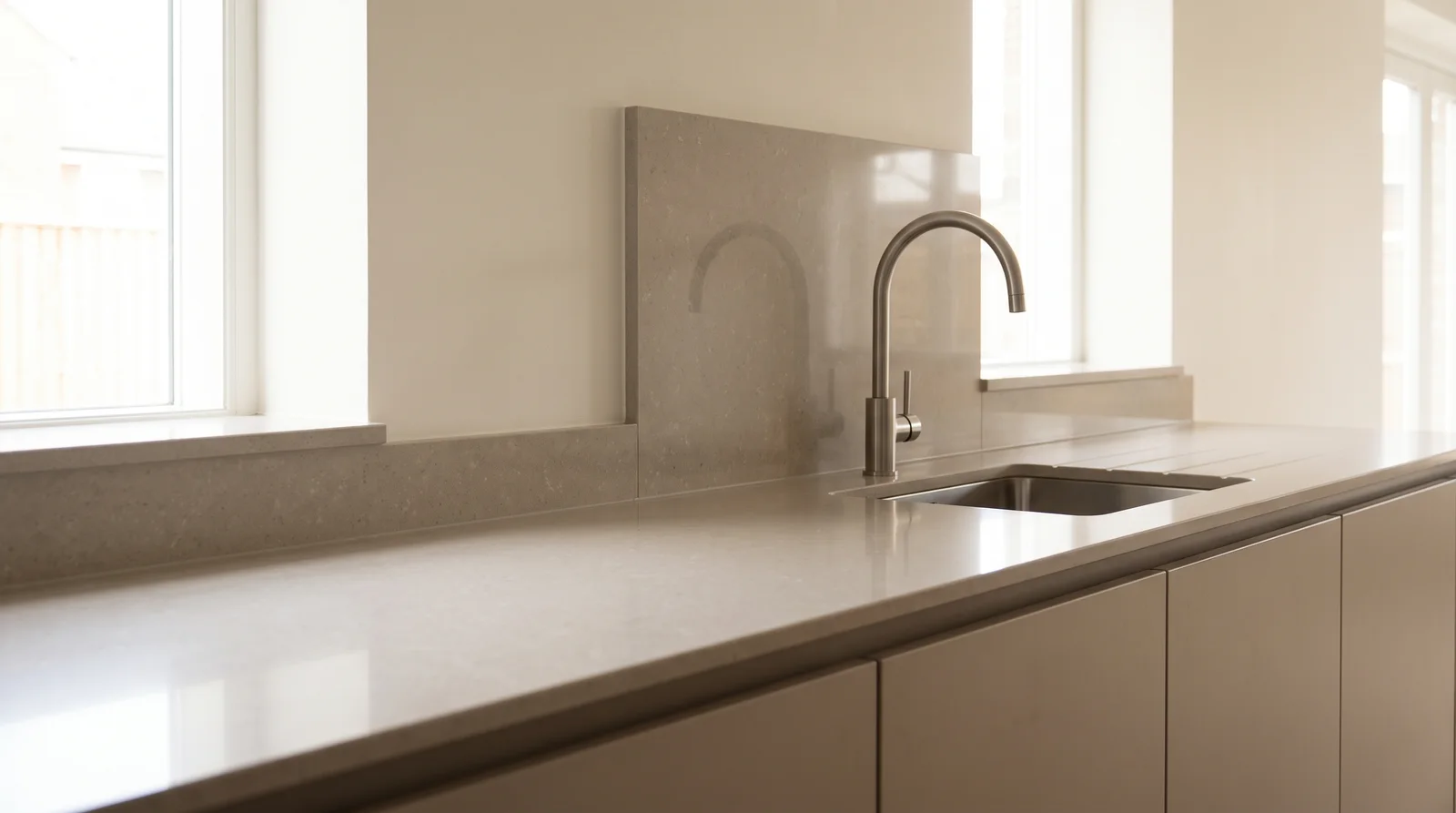
When an upstand may suit the design
An upstand creates a defined line at the back of the worktop while leaving more of the wall visible. It can suit a kitchen where paint, tiles or another wall finish should remain a substantial part of the design.
Think about where splashes are likely to reach and how you will maintain the finish above it. A short upstand gives less coverage than a taller panel, so make that choice with the way you use the sink and preparation areas in mind.
When to consider a splashback
A taller panel can cover the area behind the sink or extend towards the wall cabinets. It can also bring more of the worktop pattern into view.
For a veined surface, look at the full slab and discuss the relationship between horizontal and vertical pieces. Matching material names does not by itself guarantee that the veins will align at a corner or continue across a joint.
Can you combine the two?
Yes. You might use an upstand along one run and a taller splashback in another area. Agree where each piece begins and ends, and how its exposed edges will be finished.
Choose the arrangement around your cabinetry, available wall space and appliance requirements. There is no single height that works for every kitchen.
Details to resolve before fabrication
| Detail | What to discuss |
|---|---|
| Coverage | Mark the exact wall areas to be covered. |
| Fittings | Finalise socket and fitting positions before openings are made. |
| Pattern | Review the direction of veins and the meeting of adjacent pieces. |
| Wall condition | Confirm the preparation required for the installation system. |
| Appliances | Check the specific material suitability and required clearances. |
| Joints and edges | Agree where pieces meet and which edges are visible. |
Check suitability around appliances
Do not choose a surface behind a heat source on appearance alone. The proposed material and installation must meet the appliance instructions and the surface manufacturer’s guidance.
Classic Quartz Stone’s care guidance calls for protection from sudden heat changes. General durability should not be taken as approval for every installation position. Have the actual combination reviewed before fabrication.
Plan the wall and worktop together
Start with the colour you prefer, then decide how much of that surface you want to see on the wall. Add the upstand or splashback to your initial project enquiry so its measurements, openings and finish can be considered with the worktops.